

- Xingtai Shanfeng Special Rubber Products Co., Ltd
- Main products: oil seal, o ring, rubber seals, gasket seal

-
 sales
Hi there! Welcome to my shop. Let me know if you have any questions.
sales
Hi there! Welcome to my shop. Let me know if you have any questions.
Your message has exceeded the limit.
Which material is better for oil seals: NBR or FKM?
2025-06-21 17:03:19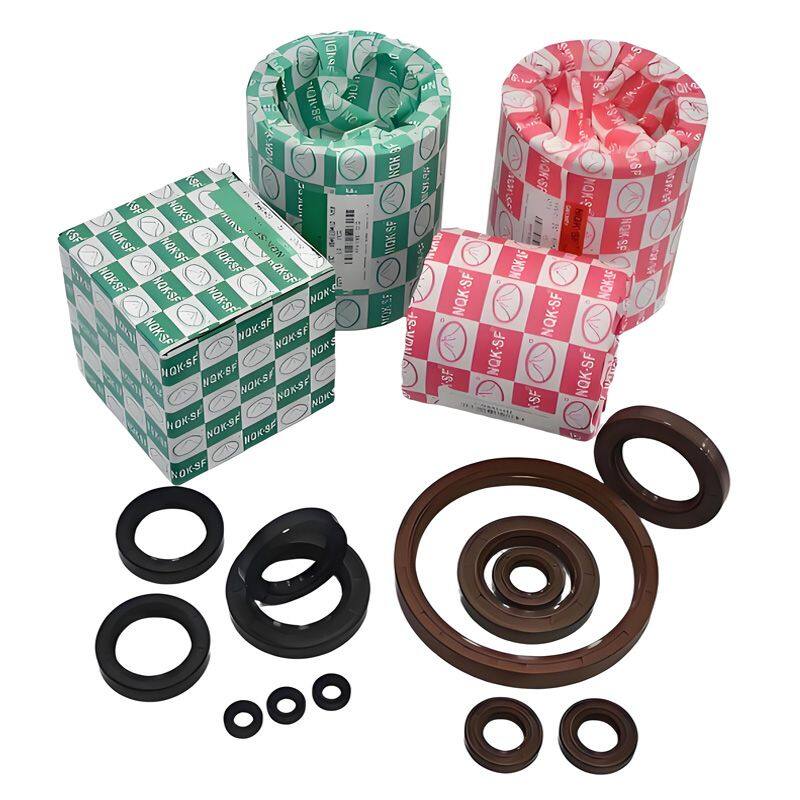
When choosing oil seal materials, NBR (nitrile rubber) and FKM (fluororubber) are two common options, which are suitable for different working conditions. Many users often face a question when purchasing or designing oil seals: Is it better to choose NBR material or FKM material? In fact, there is no absolute answer to this question, but it should be judged according to the specific conditions of use.
1. Material performance comparison
1. Temperature resistance:
The temperature resistance range of NBR is roughly between -40℃ and 120℃, which is suitable for conventional hydraulic systems, lubrication systems and medium and low temperature environments; while FKM has stronger temperature resistance and can work for a long time in the range of -20℃ to 250℃, which is suitable for scenes with large heat loads such as high-temperature engines, gearboxes, and turbocharger systems.
2. Oil and chemical resistance:
NBR has good tolerance to mineral oil and hydraulic oil, but weak resistance to gasoline, strong acid, alkali or polar solvents; in contrast, FKM exhibits excellent chemical stability and can resist almost all kinds of oils, fuels, solvents and chemical media, especially suitable for highly corrosive environments such as chemical industry and petroleum.
3. Cost and availability:
NBR is a general-purpose rubber with abundant raw materials and relatively low price, suitable for large-scale standard applications; while FKM is a high-performance rubber with high production cost and high market price, usually used in key equipment or high-end industrial scenarios with high requirements for sealing performance.
4. Aging resistance and service life:
NBR is prone to hardening, cracking and even failure in long-term high temperature and high oil environment; FKM has excellent thermal oxidation stability and anti-aging performance, which can significantly extend the service life and replacement cycle of oil seals.
2. Examples of applicable environments
NBR is applicable to: ordinary hydraulic cylinders, agricultural machinery, water pump seals in low-temperature conditions, and general equipment with low oil requirements.
FKM is applicable to: sealing requirements under harsh working conditions such as automobile engines, gearboxes, high-temperature vacuum pumps, chemical pumps, and fuel systems.
3. Material selection suggestions
If the application environment is medium and low temperature, the pressure is relatively stable, the medium is conventional lubricating oil or hydraulic oil, and it is sensitive to cost, it is recommended to choose NBR oil seals; but if the operating environment temperature is high, the medium is complex or corrosive, and there are high requirements for sealing reliability, FKM material should be preferred.
NBR and FKM are not better, but each has its own advantages and strengths. The key to choosing which material is to understand the working conditions and weigh performance and cost.
Tags: oil seals, NBR oil seal, FKM oil seal
 Business License